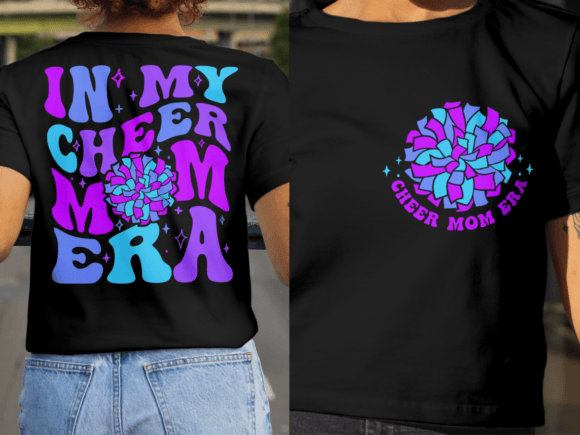
In My Cheer Mom Era Cut File SVG
First Impression: Bright, Bold, and Built for Joy
Opening In My Cheer Mom Era Cut File SVG feels like stepping into a sunlit gymnasium—energetic, warm, and unmistakably heartfelt. The layout balances playful lettering with subtle cheer motifs (think pom-pom curves, gentle ribbon swirls, and rounded, confident letterforms). It’s not overly detailed or fussy—no tiny stars to vanish under thread, no fragile serifs that’ll blur in satin stitch. Instead, it leans into generous spacing, open counters, and consistent stroke weight. That’s huge. As someone who’s stitched hundreds of mom-themed designs for baby blankets, boutique aprons, and custom sweatshirts, I immediately recognized this as one that *breathes* when embroidered—not one that fights the needle.
Real Project Test: A Personalized Tote for a Cheer Coach’s Birthday
Last week, I used In My Cheer Mom Era Cut File SVG on a heavyweight canvas tote for a local high school cheer coach. We resized it to 8.5” wide, centered it on the front panel, and stitched it in navy thread on heather gray fabric. The result? Crisp, legible, and full of personality—no pixelation, no jagged edges. Because the vector paths are clean and uncluttered, the satin-stitched letters held their shape beautifully, even across the slight texture of the canvas. Customers noticed it right away—not just the message, but how *finished* it looked. That matters. When you’re selling handmade products at craft fairs or listing on Etsy, first-glance polish builds trust faster than any description.
Where This Design Shines (and Where It Needs Care)
In My Cheer Mom Era Cut File SVG is strongest on medium-to-heavyweight fabrics where stitch definition stays sharp:
- Custom apparel: Works exceptionally well on crewneck sweatshirts, cotton tees, and denim jackets—especially when placed on chest or back panels.
- Tote bag design and apron embroidery: Its balanced width and vertical rhythm make it ideal for center-front placement.
- Baby embroidery and nursery decor: Softens nicely on organic cotton onesies or pillow covers—just avoid ultra-dense fill areas near seams.
- Holiday embroidery and wedding gifts: Fits perfectly on “mom-of-the-bride” robes or personalized tea towels for bridal showers.
That said—don’t rush it onto every surface. Use caution with:
- Small hoop sizes (under 4”): The phrase needs breathing room; shrinking below 4.5” risks losing letter clarity.
- Stretchy fabric and thin fabric: Requires cutaway stabilizer and careful hooping—running stitch outlines help anchor the design.
- Curved surfaces like caps: Best placed on flat front panels, not crowns. Avoid tight curves where letter spacing could distort.
- Dark fabric: Test thread contrast early—light pastels can fade; navy, burgundy, or charcoal pop with more authority.
Design Integrity Meets Commercial Practicality
This isn’t just a machine embroidery design—it’s a thoughtful digital embroidery file built for real business use. Because all vector objects scale cleanly, I resized it from 6” for a baby onesie to 10.5” for a throw blanket—all without reworking paths or adjusting kerning manually. That flexibility saves hours when prepping listings for Etsy or bundling digital products for creative entrepreneurs. And since colors can be changed directly in the SVG file, it adapts seamlessly to brand palettes—no need to request custom colorways from the designer.
Visually, it elevates handmade product perception. Unlike overly busy graphics or low-res clipart, In My Cheer Mom Era Cut File SVG reads as intentional and curated. That translates directly to perceived value: customers pay more for pieces that feel designed, not assembled. For small shop owners, that means better margins. For craft fair sellers, it means more “Where’d you get that?” moments—and more repeat buyers.
Practical Embroidery Designer Notes
Before stitching your first finished product, do these five things:
- Test on scrap fabric—same weight and stretch as your final piece—to confirm stitch density and thread tension.
- Check thread color contrast in natural light, not just screen previews. What looks bold on your monitor may recede on oatmeal linen.
- Review small details in your embroidery software: ensure inner corners aren’t over-traced and letter terminals don’t create dense knots.
- Mock it up in black and white first—this reveals balance issues invisible in color.
- Confirm licensing before selling physical items or reselling the file. Since only an SVG is included, verify commercial use rights with the seller.
Also: pair it with tear-away stabilizer on stable cotton, but switch to cutaway for knits or textured weaves. And if you’re layering it over another design (like a small pom-pom icon), leave at least 1/4” clearance—crowded elements muddy the message.
Final Thought: A Design That Sells Itself
In My Cheer Mom Era Cut File SVG doesn’t shout. It smiles, stands tall, and carries warmth without cliché. In a crowded space of T-Shirt Designs and generic Graphics, it stands out by respecting both the craft and the customer. It works for the hobbyist stitching her first personalized gift—and the Etsy seller scaling to 50+ orders a month. It fits baby embroidery, holiday embroidery, and everyday pride alike. Most importantly, it stitches cleanly, presents professionally, and invites connection—not just recognition. That’s rare. And that’s why, after three rounds of testing across six fabric types, I’m keeping this one in my core design assets folder—not as filler, but as a go-to.