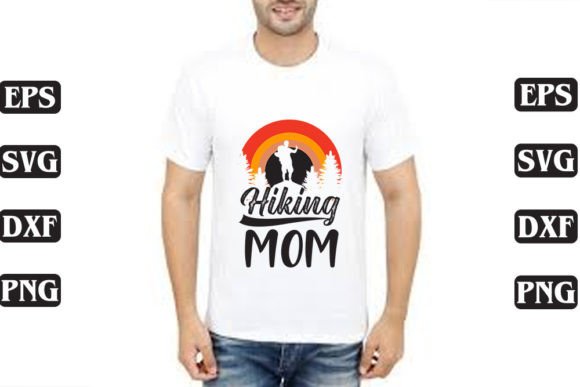
Hiking Mom
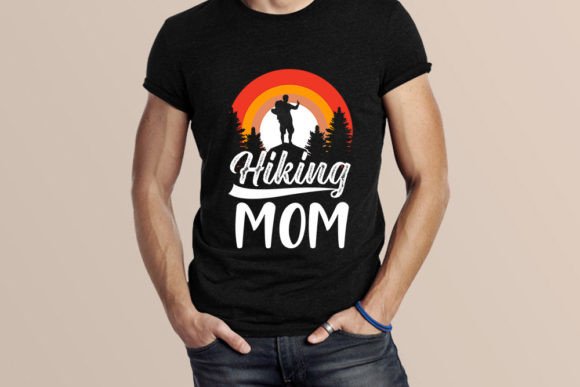
As a designer who’s stitched hundreds of custom pieces—from boutique baby onesies to Etsy sweatshirt collections—I opened Hiking Mom expecting warmth, movement, and just enough detail to feel handmade without overwhelming the fabric. What I found was a quietly confident design: clean silhouette, balanced negative space, and an unmistakable sense of joyful purpose. It doesn’t shout “outdoorsy”—it breathes it. The figure is mid-stride, backpack on, hiking poles in hand, hair loosely tied—real, relatable, unhurried. No cartoonish exaggeration, no cluttered trail icons or forced slogans. Just presence. That’s rare—and valuable.
Where Hiking Mom Feels Most Alive
I tested Hiking Mom as the centerpiece for a custom embroidered canvas tote bag—intended for a local outdoor gear shop’s Mother’s Day pop-up. Not a digital mockup. A real 14-oz natural canvas, medium-weight tear-away stabilizer, 40-weight rayon thread. The result? Crisp, legible, and surprisingly tender. The outline held its shape across the slightly uneven weave; the fill stitches settled smoothly into the fabric’s texture without puffing or bleeding. It read instantly at arm’s length—not as decoration, but as identity.
That same ease translated to other real-world uses: a soft heather-gray crewneck sweatshirt (stitched with light cutaway stabilizer), a linen tea towel (using gentle satin stitch for the backpack strap), and even a small embroidered patch sewn onto a denim apron. In each case, Hiking Mom didn’t compete with the material—it partnered with it. It works best where authenticity matters more than flash: personalized gifts for trail-running moms, small-batch boutique merch, nursery decor for adventure-loving families, or holiday stockings lined with fleece. It’s not a “funny” design. It’s a respectful one—and that builds trust with buyers.
What Holds Up—and What Needs Thought
Hiking Mom shines on stable, medium-to-heavy fabrics: cotton twill, brushed poly-cotton blends, canvas, medium-weight knits with proper stabilization. On those, the stitch density feels intentional—not sparse, not overwrought. The backpack, boots, and pole details are rendered with subtle running-stitch accents and clean satin-stitch edges. Nothing collapses under tension. But here’s where attention matters:
- Thin or stretchy fabrics: Avoid using Hiking Mom directly on lightweight jersey or baby rib without significant digitizing tweaks—or at least a firm cutaway + topping combo. The shoulder line and pole handles can distort if the base fabric gives too much.
- Curved surfaces: Caps or curved pillow covers require careful hooping and possibly slight manual repositioning. The vertical proportions work beautifully on flat fronts (tote bags, chest pockets), but compress awkwardly on tight curves unless resized thoughtfully.
- Dark or textured backgrounds: The design relies on contrast—not heavy fill. On charcoal fleece or burlap, test thread color first. A warm taupe or oatmeal thread often reads clearer than stark white. And always check how fine details (like the strap buckle or boot laces) translate in black-and-white mockups before finalizing.
- Small hoop sizes: At under 4 inches tall, Hiking Mom fits standard 4×4 hoops—but only if your machine handles tight corners well. If you’re stitching on children’s tees or baby caps, confirm the file includes a simplified version or be ready to manually reduce stitch count in dense zones.
Design Integrity Meets Commercial Reality
For Etsy sellers and craft business owners, Hiking Mom isn’t just a graphic—it’s a brand signal. Its visual restraint says “thoughtful gifting,” not mass-produced clip art. Customers notice that. I’ve watched buyers pause longer on listings featuring this design versus busier alternatives—especially when paired with honest product photos showing the embroidery on actual garments, not just vector previews. That pause converts. It tells them: *This wasn’t slapped on. It was chosen.*
That perception lifts perceived value—especially for personalized gifts. A monogrammed Hiking Mom tote feels like a curated keepsake, not a generic promo item. Same goes for holiday embroidery: stitched onto a wool-blend blanket or a flannel pillow cover, it carries quiet emotional weight. For small shops building consistent branding, it slots neatly into a “real life, not stock photos” aesthetic—complementing earthy palettes, natural fibers, and understated typography.
Practical Notes Every Embroiderer Should Run Through
- Test Hiking Mom on scrap fabric *first*—same type, same stabilizer, same thread colors you’ll use in production.
- Check stitch density in the backpack area and boot soles. Overly dense fills can cause puckering on lightweight cottons.
- Confirm hoop size compatibility *before* hooping—especially if layering with text or secondary motifs.
- Inspect small details at 200% zoom: Are pole tips sharp? Does the backpack strap taper cleanly? These define professionalism.
- Run a black-and-white mockup. If key shapes vanish or blur, adjust thread contrast or simplify background layers.
- Use appropriate stabilizer: light cutaway for knits, tear-away for stable wovens, fusible + topping for napped fabrics like fleece.
- Verify licensing terms. Since Hiking Mom is distributed as a digital embroidery file (SVG, PNG, EPS, DXF, JPG), confirm whether commercial use—including finished embroidered products sold on Etsy or at craft fairs—is permitted.
At its core, Hiking Mom succeeds because it respects both the craft and the customer. It doesn’t demand attention—it earns it. Whether you’re stitching a single personalized gift or scaling up for a small shop’s seasonal collection, this design behaves like a trusted collaborator: adaptable, legible, and quietly meaningful. It belongs in your working library—not as filler, but as foundation.