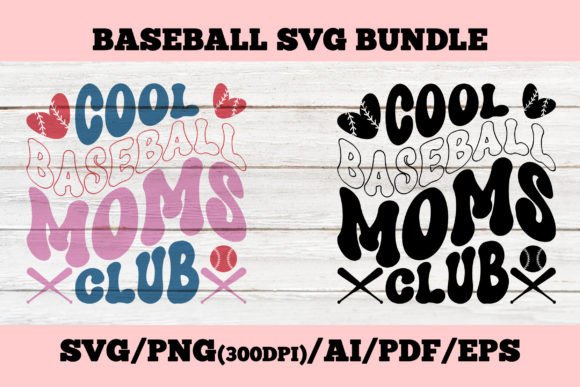
Cool Baseball Moms Club T-Shirt
First Impression: Friendly, Bold, and Built for Real Life
When I opened the Cool Baseball Moms Club Baseball T-shirt design, I didn’t see just another graphic—I saw a mood. It’s warm but confident, playful but grounded, with clean lines and a balanced layout that immediately reads as “team spirit meets everyday pride.” The composition feels intentional: not too busy, not too sparse—just right for stitching on a sweatshirt cuff, a tote bag front, or a baby onesie pocket. As an embroidery designer who’s stitched hundreds of mom-themed projects, I appreciate how this design avoids cliché while still landing squarely in the heart of its audience.
Where It Shines: Sweatshirts, Totes, and Thoughtful Gifts
I recently used the Cool Baseball Moms Club Baseball T-shirt design to embroider a midweight cotton sweatshirt for a local boutique’s spring collection—and it worked beautifully. The lettering held crispness across the knit fabric, and the baseball motif translated well in satin stitch without excessive density. It also scaled cleanly down to a 3.5-inch hoop for a set of personalized kitchen towels, where the simplicity of the graphic kept the embroidery legible even after multiple washes.
This design naturally fits into several high-intent categories: custom apparel for team families, embroidered patches for aprons or backpacks, baby embroidery on soft cotton onesies (great for opening day gifts), and holiday embroidery on pillow covers for Mother’s Day or Father’s Day bundles. As a digital embroidery file, it’s versatile enough for both personal keepsakes and small-batch commercial embroidery—especially for Etsy sellers building cohesive collections around sports, parenting, or community pride.
Where to Pause: Texture, Scale, and Fabric Realities
That said, the Cool Baseball Moms Club Baseball T-shirt isn’t universally forgiving—and that’s okay. On highly textured fabrics like thick terry cloth or bouclé knits, the finer interior details (like subtle shading or thin outline strokes) can blur unless you adjust stitch density or add a cutaway stabilizer. Similarly, on stretchy fabrics—think lightweight jersey tees or ribbed baby bodysuits—you’ll want to test first: running stitch outlines may shift if tension isn’t dialed in just right.
It’s also not ideal for tiny hoops under 3 inches. The lettering is friendly, not microscopic—but if you’re planning a cap front or a child’s beanie, check whether the full phrase fits comfortably within your hoop’s usable area before digitizing or stitching. And while the design works on dark fabric, avoid relying solely on white thread for contrast; consider a tonal blend (e.g., heather gray thread on charcoal) for richer depth in finished products.
Design Assets That Earn Trust—Not Just Clicks
What makes the Cool Baseball Moms Club Baseball T-shirt feel trustworthy for craft business use isn’t just its visual clarity—it’s how it supports professionalism in every step. When customers see this stitched cleanly on a boutique sweatshirt or a handmade gift box, it signals care, consistency, and intention. That matters for Etsy sellers: buyers scroll past generic clipart fast, but pause for designs that look *designed*, not dropped in.
I’ve found it especially effective in printable mockups—paired with soft lifestyle photography, it reads as elevated, not mass-produced. That lifts perceived value for small shop products, whether you’re selling the finished embroidered item or licensing the digital embroidery file itself. Just remember: since the listing mentions “Print this design for a sweater, jumper, hoodie, t-shirt, mug, pillow, and other products,” confirm licensing terms before using it commercially on physical goods or reselling as part of a bundle.
Practical Notes Every Embroidery Designer Should Run Through
- Test first—Always run a sample on scrap fabric matching your final product’s weight and stretch.
- Check thread color contrast—Especially on light backgrounds where white or yellow thread might disappear against off-white fabric.
- Review stitch density—If your machine struggles with dense fill areas, simplify background elements or reduce underlay.
- Confirm hoop size compatibility—Don’t assume it fits your standard 4x4 unless verified; some versions may require 5x7.
- Inspect small details—Zoom in on corners, curves, and letter junctions in your embroidery software to spot potential nesting issues.
- Test black-and-white mockups—This reveals contrast issues invisible on screen but critical for real-world legibility.
- Use proper stabilizer—Lightweight tear-away works for stable cottons; cutaway is safer for knits or layered garments.
- Verify dual-use rights—If selling finished embroidered items or digital embroidery files, double-check usage permissions.
A Design That Fits—Not Just the Hoop, But the Moment
The Cool Baseball Moms Club Baseball T-shirt doesn’t try to be everything. It’s not ornate, not minimalist, not retro or hyper-modern—it’s present. That’s why it lands so well on real products: a coffee-stained apron at a weekend tournament, a slightly rumpled tote carried through carpool line, a baby’s onesie photographed in soft morning light. It’s the kind of graphics design that earns repeat orders because it feels honest, useful, and quietly joyful.
For embroidery designers and creative entrepreneurs, that’s rare—and valuable. Whether you’re curating T-Shirt Designs for a seasonal drop or selecting Graphics for your next craft fair booth, this one belongs in your working library. Not as filler, but as a go-to asset that stitches true, sells well, and makes your handmade product feel like it was made *for someone*—not just for sale.